An injury at work can happen in seconds, and the first few minutes often decide how serious it becomes. First aid is the immediate help given to an injured or suddenly ill person until professional medical care arrives. You do not need to be a doctor to give it, but you do need to know what to do and what not to do.
This guide covers the basics of workplace first aid. It is a general introduction and does not replace a hands-on course.
What Is First Aid?
First aid is short-term care given at the place of the accident. Its goals are simple:
- Protect life
- Prevent the condition from getting worse
- Help the person recover
For minor cuts, scrapes and small burns, basic first aid may be all that is needed. For serious injuries, it keeps the person as stable as possible until medical help takes over.
Why First Aid Matters at Work
Workplaces such as construction sites, factories and warehouses carry a higher risk of cuts, burns, falls, fractures and equipment injuries. Hospitals may take time to reach, so trained people on site can make a real difference. Having first aiders also helps staff feel more confident that they will be looked after.
Common Workplace Injuries
- Cuts, scrapes and bleeding
- Burns and scalds
- Sprains, strains and fractures
- Eye injuries from dust or debris
- Choking
- Heat stress and fainting
- Electric shock
- Breathing problems and cardiac arrest
A Simple Emergency Response
When someone is hurt, a clear order of action helps you stay calm:
- Check for danger. Make sure the area is safe for you, the injured person and others. Do not become a second casualty.
- Check the person. See if they respond and if they are breathing.
- Call for help. Contact your emergency services (in many parts of Pakistan this is Rescue 1122) and send someone to bring the first aid kit.
- Give first aid. Treat the most serious problem first, such as severe bleeding or no breathing.
- Stay with the person. Keep them calm and comfortable until help arrives, and tell responders what happened and what you did.
First Aid Skills a Good Course Teaches
- Basic life support, CPR and rescue breathing
- Controlling bleeding and caring for wounds with dressings and bandages
- Treating minor and major burns
- Handling fractures, sprains and how to support or immobilise an injury
- Helping adults and children who are choking or having trouble breathing
- Using a first aid kit properly
These skills are best learned by practising on training equipment, such as CPR manikins and bandages, under a qualified trainer. Reading about them is not enough.
What Should a Workplace First Aid Kit Contain?
Exact contents depend on your workplace risks and local rules, but a basic kit usually includes:
- Adhesive plasters in different sizes
- Sterile dressings and bandages
- Triangular bandage or sling
- Gloves and a CPR face shield
- Antiseptic wipes and eye wash
- Scissors and safety pins
- A list of emergency contact numbers
Check your kit regularly, replace used or expired items and keep it where everyone can find it.
Common First Aid Mistakes to Avoid
- Moving a person with a suspected neck or back injury without need
- Putting creams, toothpaste or home remedies on burns
- Giving food or drink to someone who is unconscious
- Delaying the emergency call while you try to treat on your own
- Using the kit without checking that the area is safe first
Learn First Aid in Peshawar
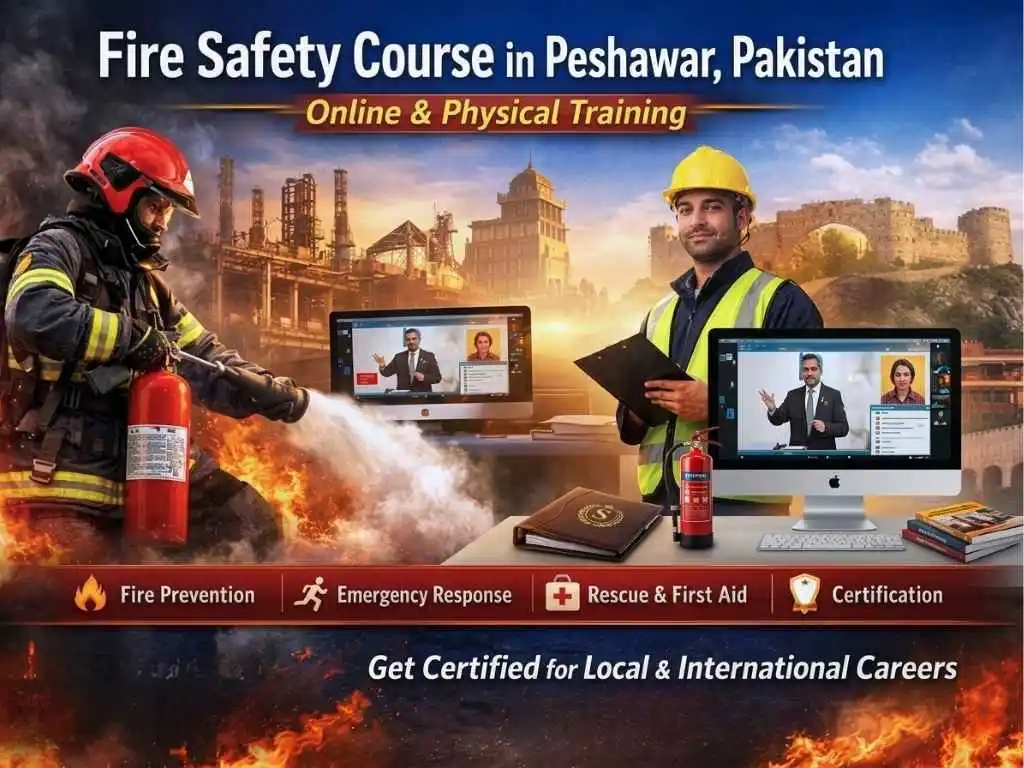
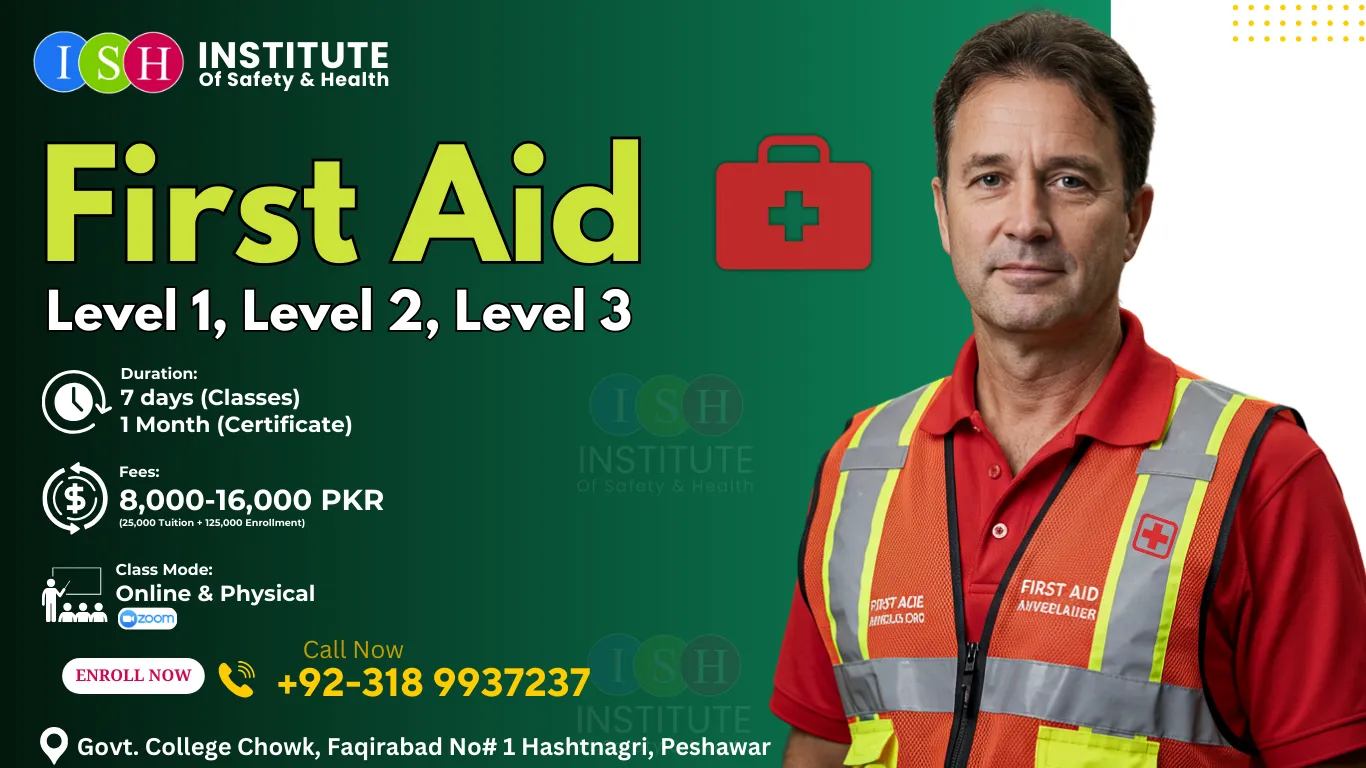
If you want hands-on practice, see our first aid training course in Peshawar page for the course content, schedule and fees. You can also read about our fire safety course, which pairs well with first aid for workplace safety roles.
Frequently Asked Questions
Who should learn first aid?
Anyone can benefit, but it is especially useful for workers on construction sites and in industry, safety officers, teachers, parents and supervisors.
Is first aid the same as medical treatment?
No. First aid is the immediate help given before professional medical care. It does not replace a doctor or hospital treatment.
Do I need a medical background to take a first aid course?
No. Courses are designed for beginners and teach the skills step by step.
How long does a first aid course take?
It depends on the provider and the level of training. Check the course page for the current schedule.
Can first aid training help my career?
Yes. A recognised first aid certificate is useful for safety officer roles and many industrial jobs, and it adds to your other safety qualifications.
Conclusion
Workplace first aid is a simple but powerful skill. Knowing how to check for danger, call for help and give basic care can protect a colleague until professionals arrive. Read the basics here, then practise them in a proper course so you are ready when it matters.
ISH Institute, Govt. College Chowk, Faqirabad No. 1, Hashtnagri, Peshawar.